
Sickle cell disease is an inherited blood disorder. Red blood cells, which are normally round and soft, become stiff and curved like a sickle. They block small blood vessels and break down early, which causes anaemia, bouts of severe pain and repeated infections.
Who gets sickle cell disease?
The disease passes from parents to children. A person who inherits the sickle gene from one parent has the trait: they are usually healthy but can pass the gene on. A person who inherits it from both parents has the disease. In India it is most common in Adivasi communities, and Madhya Pradesh is one of the states where it is seen most often.
How is screening done?
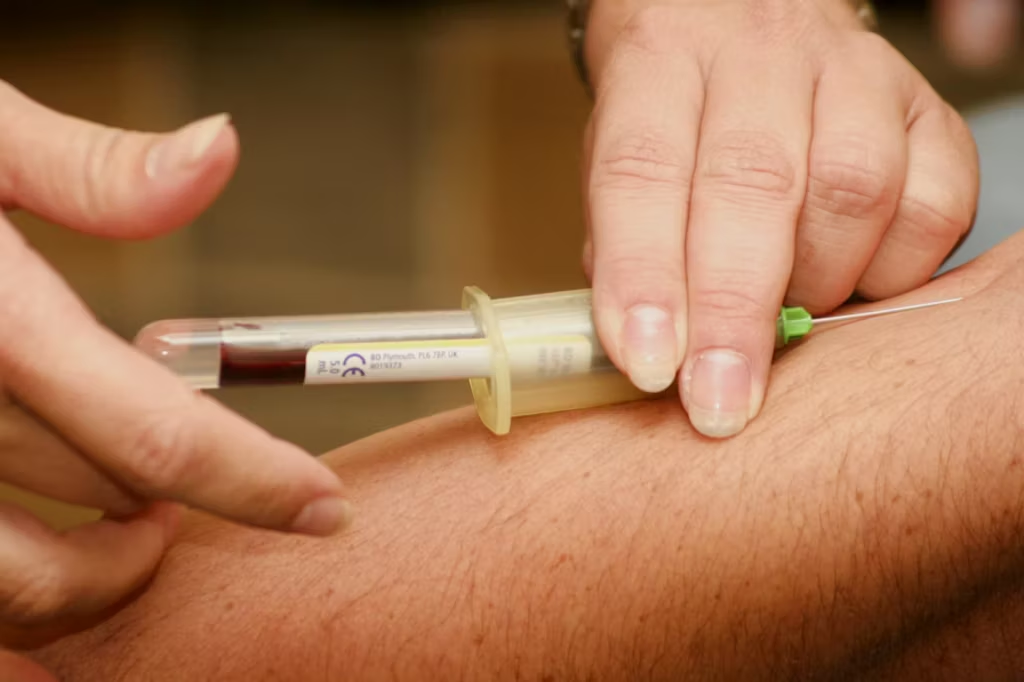
Screening needs only a few drops of blood. The result shows whether a person is normal, carries the trait or has the disease. The Government of India’s National Sickle Cell Anaemia Elimination Mission, launched from Shahdol in Madhya Pradesh in July 2023, screens people up to 40 years of age in tribal areas and gives each person a card with the result.
Why does knowing early help?
- Children with the disease can get regular check-ups, vaccines and folic acid, and their families learn the warning signs.
- Couples who both carry the trait can get counselling before they plan a family.
- Pain, fever and breathlessness are treated sooner when the family already knows the diagnosis.
Which signs need a doctor at once?
- Fever in a child known to have the disease.
- Severe pain in the chest, belly or joints.
- Difficulty breathing.
- Sudden weakness, very pale skin or yellow eyes.
- Painful swelling of the hands or feet in a small child.
Sickle cell screening is one of the checks we plan for our health camps with the village ASHA and ANM. You can also ask at your nearest government health centre about screening under the national mission; it is free.
This article is for awareness only and is not medical advice. See our Disclaimer. In an emergency, call 108 for an ambulance or 112.